
Not all AI is the same in the engineering world and that difference matters.
Most AI tools built today are designed to process information for you – whether that is summarizing, organizing, or surfacing what matters. That is genuinely helpful for many things including drafting emails, summarizing reports, or answering broad questions.
But engineering decisions are not based on general information. They are precise, contextual, traceable and compliant with regulatory requirements. When AI-generated output ends up in a product design, process or system, “close enough” is not acceptable. This is the gap engineering-grade AI is meant to address.
The reality of working with standards today
The reality of working with standards today
In most engineering organizations, standards management still runs in a conventional way – printed or PDF copies, spreadsheet trackers, and institutional memory held by a handful of experienced engineers.
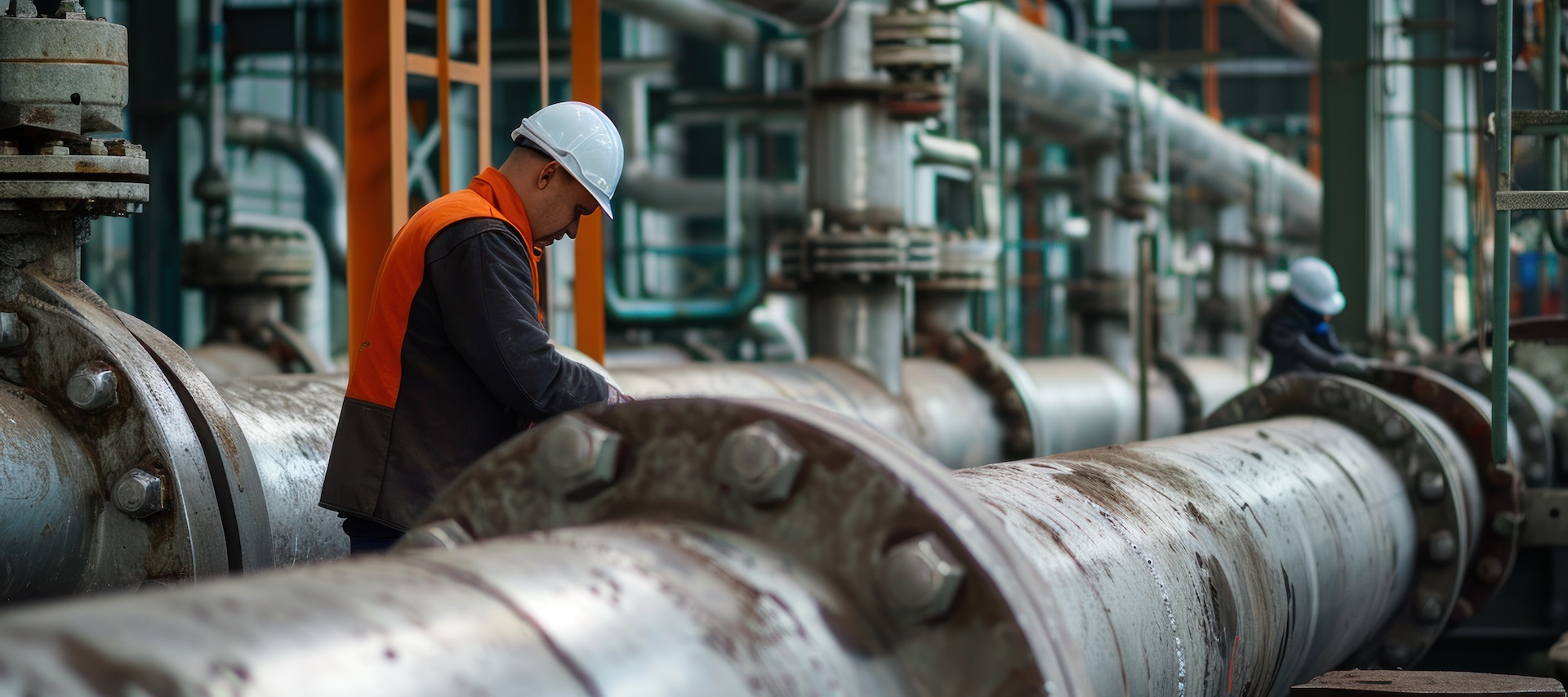
Consider a mechanical engineer designing a gas pipeline transportation system. Their primary reference is ASME B31.8 – Gas transmission and distribution piping systems. That document alone spans hundreds of pages, dozens of clauses, and material specifications that interact in non-obvious ways. It references other ASME standards, API specifications, and federal regulations which are revised periodically.
In a hard-copy or unstructured digital environment, this engineer’s day-to-day reality looks something like this:
- Identifying which clauses govern wall thickness calculations for high-pressure sour gas service requires manually reviewing ASME B31.8 against material standards and corrosion allowance tables – flipping between tabs, bookmarks, and printed annexes.
- Confirming whether a design meets the required design factor for a Class 3 Location means reading the applicable clause, finding the referenced table, verifying the material grade, and checking whether any amendments apply – each step manual, each step a potential for error.
- When ASME releases a new edition or an addendum, someone must track what changed and identify every place those changes impact the existing design. This means manually comparing and reviewing versions side-by-side. In a large pipeline project, this can take weeks or even months of senior engineering time.
The cost is not just time. It is the risk that something important gets missed – a revised pressure test requirement, a tightened inspection interval, a material qualification that no longer applies – because no one had the bandwidth to read every changed clause against every affected system.
This is not a marginal inefficiency. In gas pipeline design, a missed code requirement does not result in a simple rework. It can lead to a failed hydrostatic test, a regulatory non-conformance, or worse.
And yet, the dominant approach to standards management in most engineering firms is still fundamentally manual. Engineers highlight PDFs. They keep personal notes on clause interpretations. They rely on experienced colleagues for interpretation. When those individuals leave, critical knowledge leaves with them.
The problem is not that engineers are doing it wrong. The problem is that the volume, complexity, and rate of change of engineering standards have outgrown the tools available to manage them – especially as organizations are pushed to reduce time to market.
What engineering-grade AI does differently
The problem described is not solved by simply digitizing standards. While that improves accessibility, it does not reduce risk or the burden – the engineer is still responsible for identifying what changed, what it affects, and whether the design is still compliant.
Engineering-grade AI addresses the problem at a core level. It is built to help engineers identify critical information in their mission critical processes with the speed that modern projects demand.
Back to the pipeline engineer working with ASME B31.8. With engineering-grade AI, the work looks fundamentally different across three key areas:
Clause-level precision: Instead of manually reviewing documents to determine wall thickness requirements, the engineer queries the system directly. The response surfaces the exact governing clause, table, or figure. What once took hours now takes minutes.
Interdependencies: ASME B31.8 does not exist in isolation. It references ASME B16.5 for flanges, API 5L for pipe grades and many more. Engineering-grade AI understands these relationships across the entire standards ecosystem – not just a single document.
Change impact analysis: When a new edition is released, engineers do not start from scratch. Engineering-grade AI identifies clause-level changes, maps them to previous versions, and highlights what affects the current design. What previously required weeks of effort becomes a structured, auditable process.
Traceability from source to decision: Every clause reference links directly back to the authoritative source. Engineers can trace any design decision to its governing standard, creating an audit-ready record without additional documentation effort.
When the source is visible and the reasoning is traceable
Accuris Engineering Workbench (EWB) is built to bridge exactly this gap. It is not a document repository with a search bar. It is built specifically for how engineers work, designed to turn standards into actionable, traceable intelligence.
At its core is deep interconnectivity across standards, whether API, IEC, ASME, or others – allowing engineers to move seamlessly between related requirements without breaking workflow. Instead of searching across disconnected sources, engineers can navigate across publishers within a single environment. With access to over 2.8 million industry standards, engineers always have full context at their fingertips.
For example, when a new ASME B31.8 edition is released, a pipeline engineering team does not need to manually compare documents. EWB surfaces clause-level changes and produces a traceable record. That traceability is not incidental. It is the point. In a regulatory audit or in a running project, the question is never just “did you comply?” It is also “how do you know?” EWB answers that question with a documented chain from design decision back to authoritative source.
With embedded compliance, full traceability, and streamlined workflows, Engineering Workbench reduces risk, eliminates rework, and keeps projects moving.
The question every engineering organization should be asking
Engineering organizations are under increasing pressure to move faster while maintaining absolute confidence in compliance. Even with established standards management processes in place, challenges arise with change management, identifying critical insights, and when critical knowledge is concentrated with a set of experts.
The question is no longer whether to change the process. It is whether the tools being considered are actually built for how engineering work happens.
Can I see exactly what the AI relied on to give me that answer – the specific clause, the specific version – and can I verify it against an authoritative source?
Can I move seamlessly from that answer into the underlying standard, its cited references, without losing context?
In modern engineering environments, answers do not exist in isolation. They depend on a web of interrelated standards, references, and requirements. A tool must reflect that reality – connecting engineers directly into a living network of authoritative content, not forcing them to search across disconnected systems.
A tool that cannot answer these questions is a research aid. It may reduce reading time. It will not reduce liability, and it will not give a design authority the confidence to sign off based on what it produces.
Engineering-grade AI is defined by what happens after the answer is returned: the source is visible, the reasoning is traceable, and the engineer can navigate across dependencies – from clause to citation to application – within a single, verifiable environment. That is what separates engineering intelligence from everything else. And for organizations running pipeline systems, certified equipment, or safety-critical infrastructure, it is not a nice-to-have. It is the baseline.
Book time with one of our experts to see how Engineering Workbench works in practice.